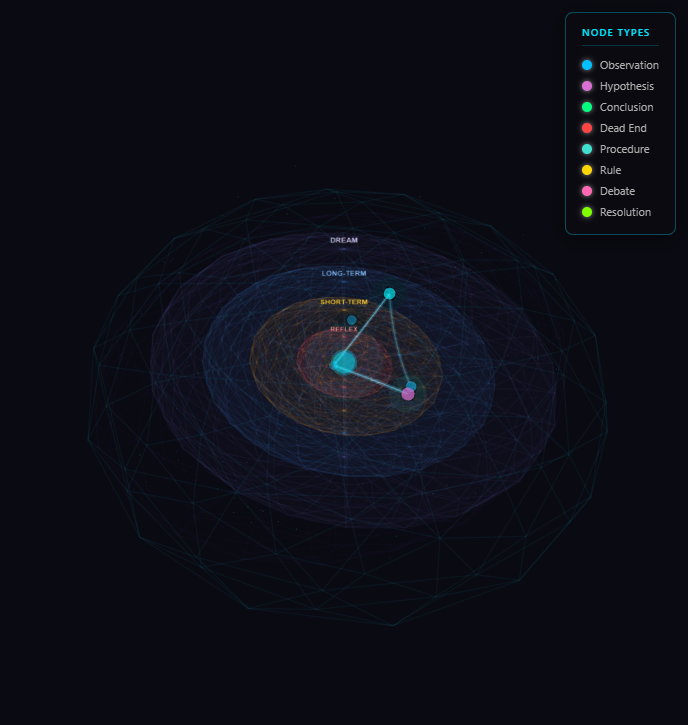
Step 1 · Frame the story · OBSERVATION
The writer frames the play. Claude takes in the world. Ariadne stores the story's first thread.
 Ariadne
Drafting a stage play — every character, twist and cut subplot held together across the whole story.
A real run — every screenshot is the agent's live memory after that step.
The writer frames the play. Claude takes in the world. Ariadne stores the story's first thread.
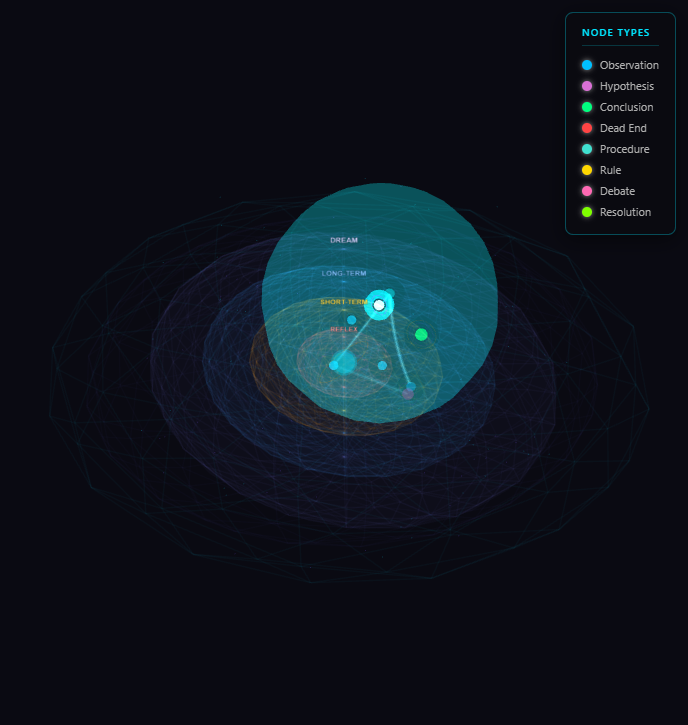
The writer names the cast. Claude notes each one. Ariadne keeps the characters together.

The writer raises an open question. Claude holds it open. Ariadne records it for the debate.
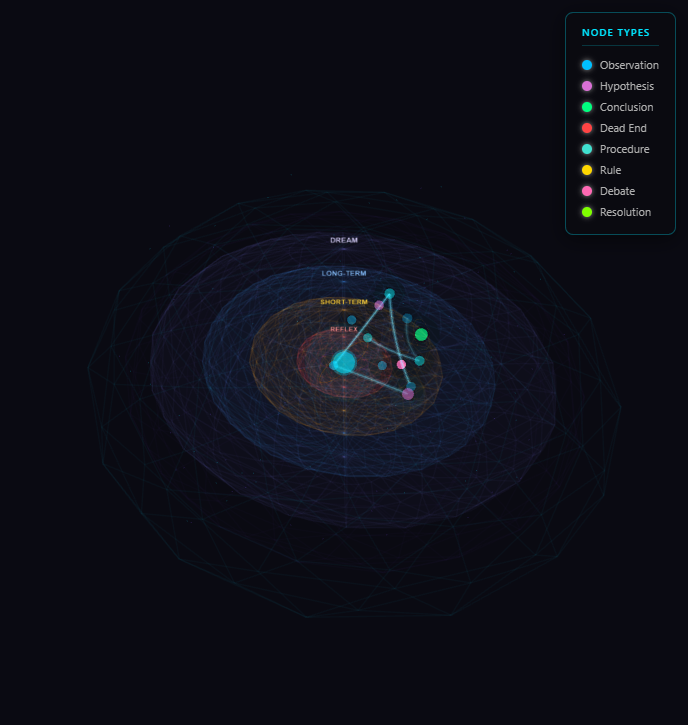
The writer floats an idea. Claude treats it as a hunch. Ariadne files it as a hypothesis.
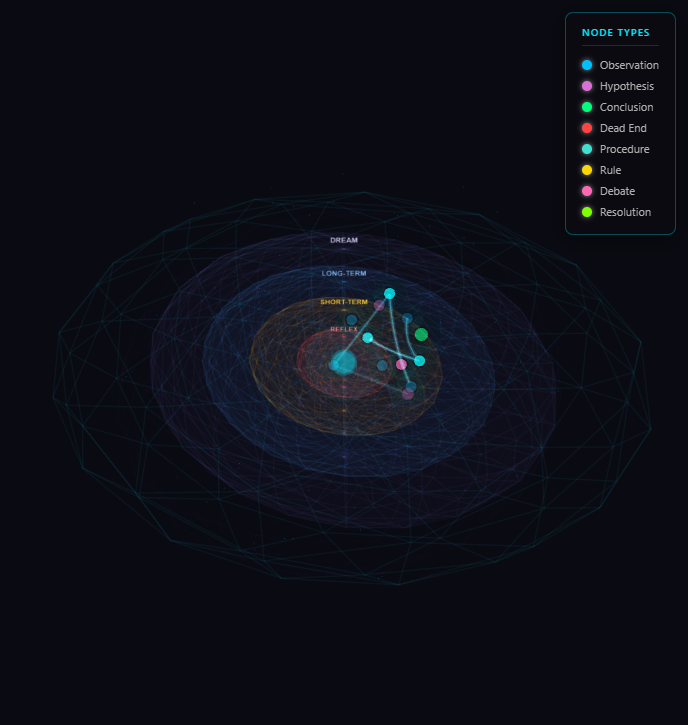
The writer opens a debate on structure. Claude lays out both. Ariadne starts the debate thread.
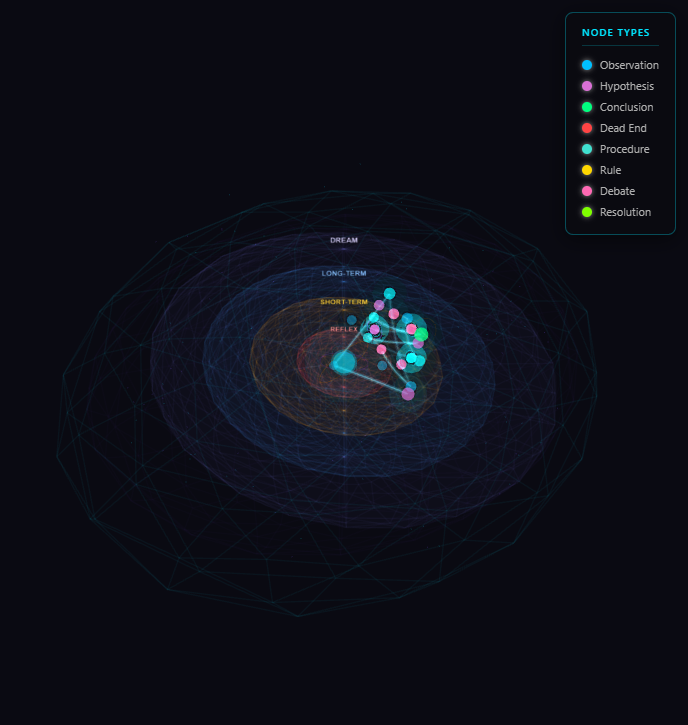
The writer weighs depth against clarity. Claude balances them. Ariadne links each argument to the debate.
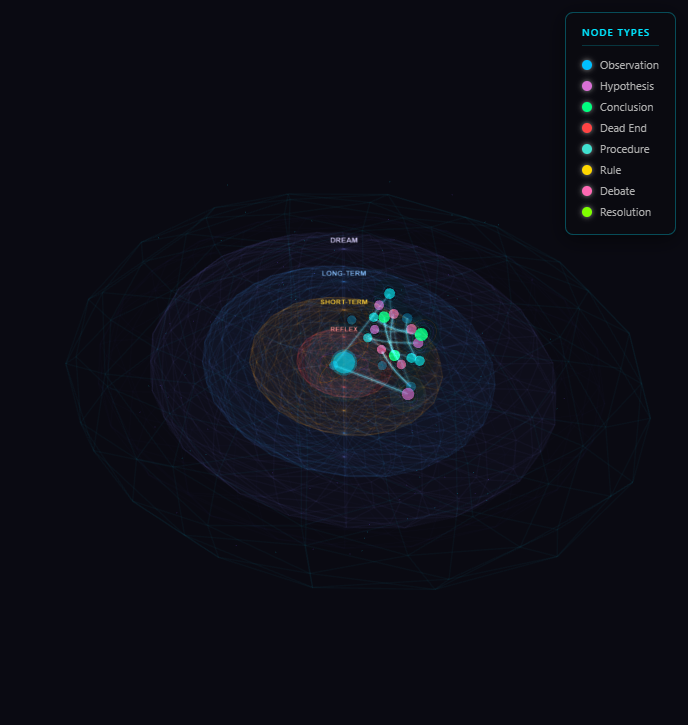
The writer decides. Claude commits to the structure. Ariadne stores the resolution for good.
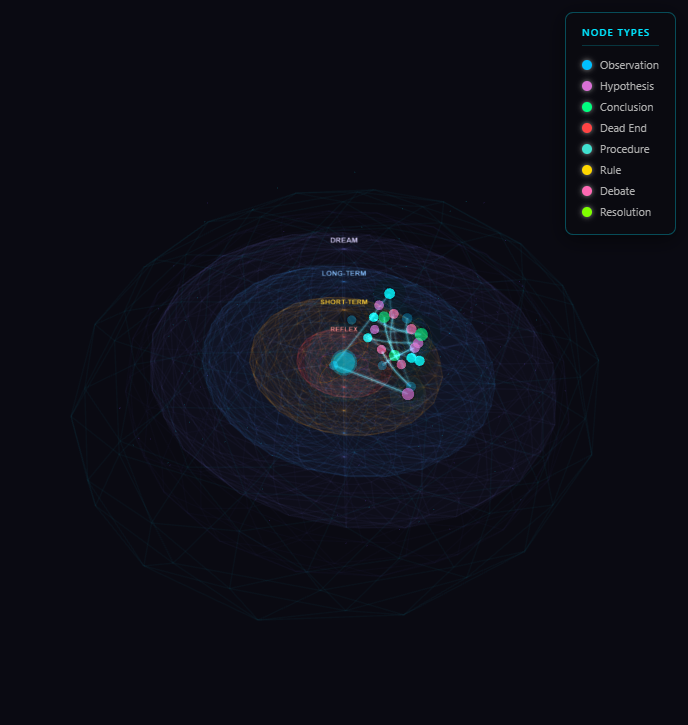
The writer asks for the scene. Claude drafts the beat. Ariadne logs the action and the planted setup.
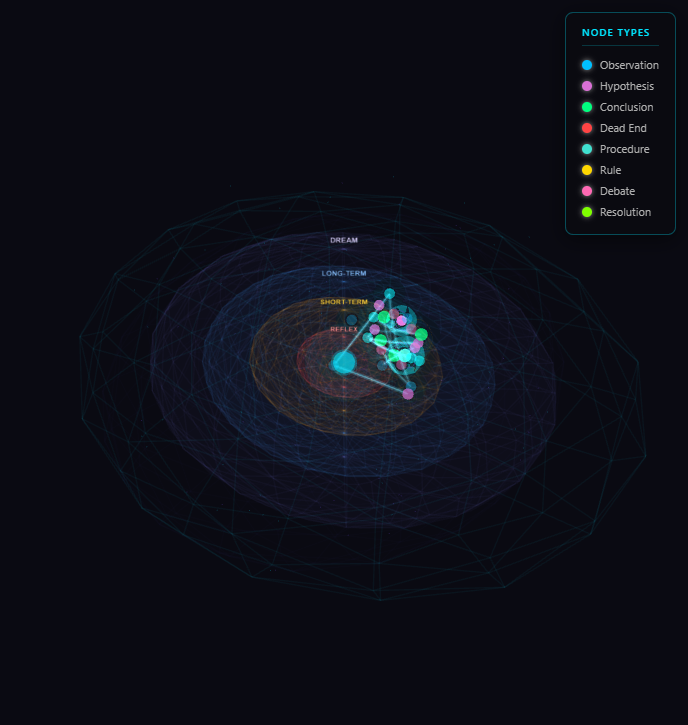
The writer confirms it works. Claude validates the beat. Ariadne records the conclusion.
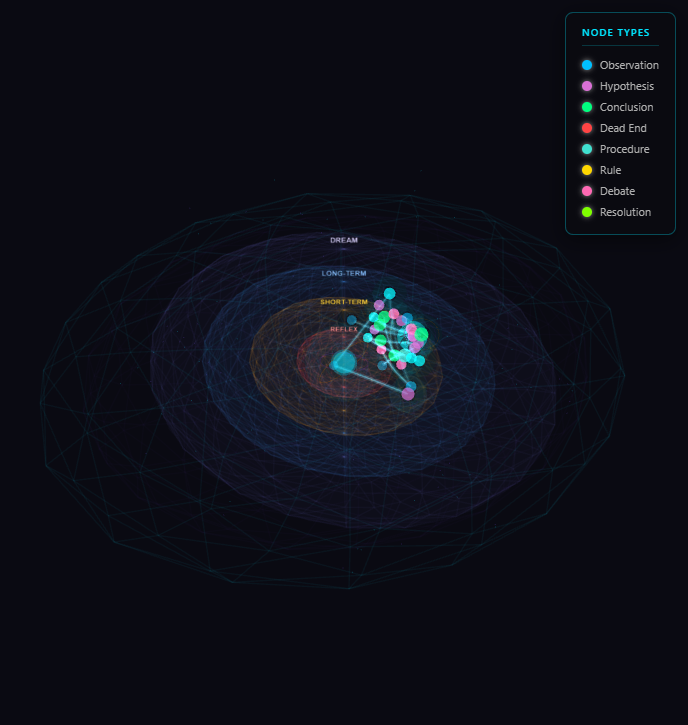
The writer flags a misfire. Claude marks it. Ariadne stores a permanent dead-end so the cut subplot doesn't creep back.
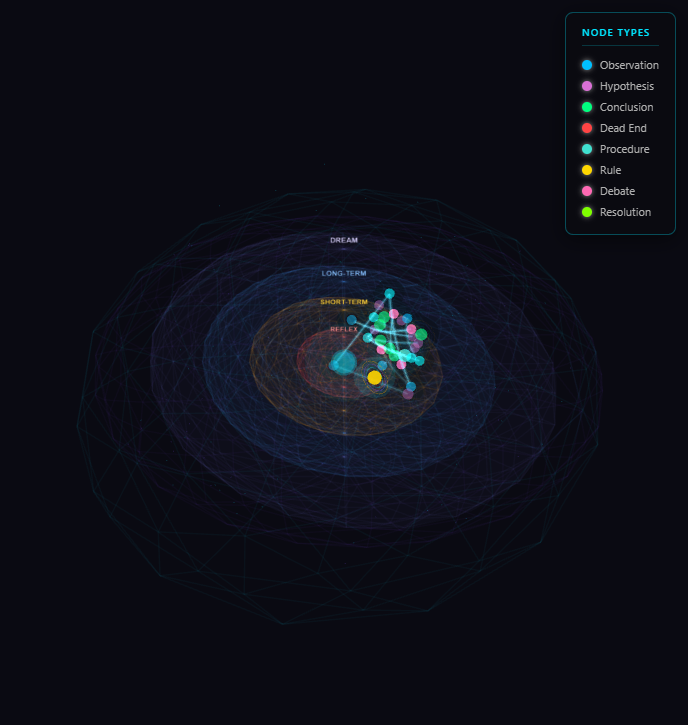
The writer sets a craft rule. Claude adopts it. Ariadne pins it near the core.
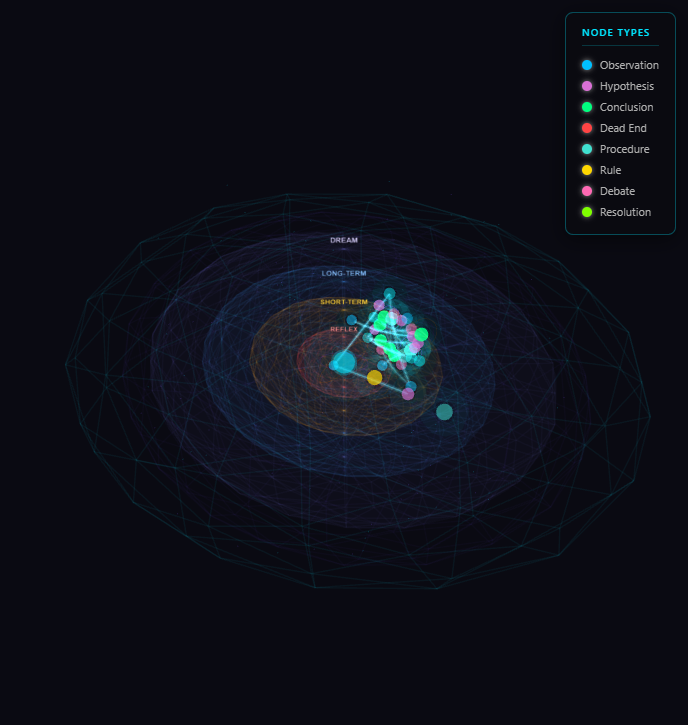
The writer records a repeatable method. Claude captures the steps. Ariadne stores the how-to.

The writer sets the through-line. Claude internalizes it. Ariadne keeps it as a reflex.

The writer asks about a planted thread. Claude answers from memory. Ariadne surfaces the Act 1 setup and its payoff.

The writer almost revives a cut idea. Claude warns it's a recorded dead-end. Ariadne flags why it was dropped.

The writer asks what happened today. Claude replays the beats in order. Ariadne returns them by time.

The writer wraps up. Claude consolidates. Ariadne merges the noise and keeps the characters, decisions and dead-ends.